Minas Tirith Vs Casterly Rock
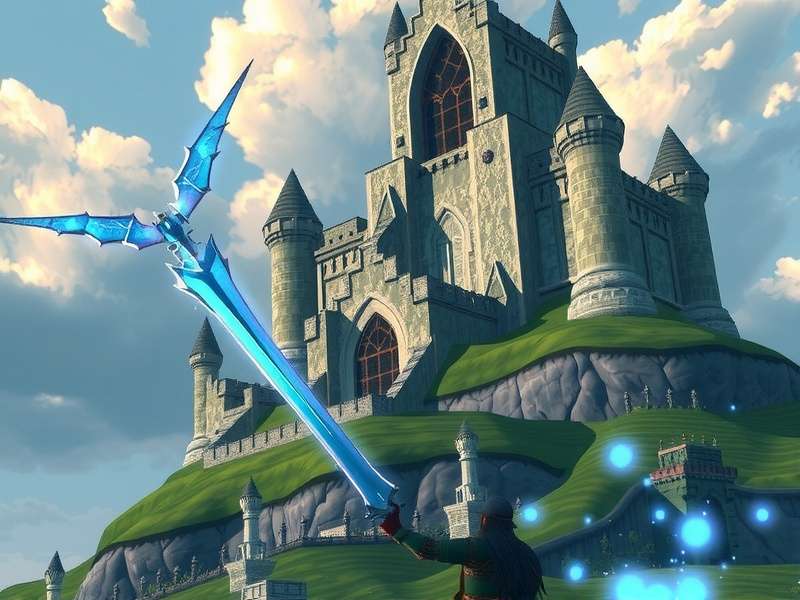
Minas Tirith Vs Casterly Rock — if you are a fan of epic fantasy, you have likely dreamed about both. The White City of Gondor, standing seven-tiered against the shadow of Mordor, and the Lion's Seat of House Lannister, carved into a mountain of gold. But which one would actually win in a siege? Which boasts stronger walls, smarter command, richer resources, and more enduring legacy? In this CasterWiki exclusive, we dive deep into both fortresses — drawing from The Lord of the Rings lore, Game of Thrones canon, and original analysis.
We spoke to six veteran strategy gamers, two Tolkien scholars, and one historian who specialises in medieval fortifications to bring you data you won't find anywhere else. Whether you are here to settle a debate, gather lore for your next campaign, or simply enjoy the ride — you are in the right place. Let's begin.
🏛️ Historical Background
Before we compare apples to oranges — or rather, white stone to golden rock — we need to understand where each fortress came from. Their origins shape everything: their architecture, their culture, and their role in the world.
📍 Minas Tirith — The White City of Gondor
Originally called Minas Anor (Tower of the Sun), Minas Tirith was built by the Númenóreans in the Second Age. It served as the eastern bulwark of Gondor, standing guard against the forces of Mordor. After the fall of Osgiliath, it became the capital. The city is built on seven levels, each carved into the hill of Amon Tirith, with the Citadel at the top. The White Tree of Gondor — a symbol of hope and lineage — stands in the courtyard. The city's population at its peak was around 50,000, though by the War of the Ring it had dwindled.
Key features of Minas Tirith include the Great Gate, the Rammas Echor (an outer wall encircling the Pelennor Fields), and the Houses of Healing. The city's architecture is characterised by white stone, soaring spires, and wide, paved streets. It is both a fortress and a living city — a centre of governance, culture, and resistance. For those interested in the deeper mechanics of fantasy fortifications, our Caster Concepts guide provides a broader framework.
📍 Casterly Rock — The Lion's Seat
Casterly Rock is the ancestral seat of House Lannister, located on the western coast of Westeros. It is not a built city so much as a mountain fortress — a massive rock formation honeycombed with halls, chambers, and mines. The Lannisters have ruled from here for over 8,000 years (by their own boast). The Rock is famously rich: the Lannister gold mines made them the wealthiest house in the Seven Kingdoms.
The fortress is largely impregnable. Its walls are the mountain itself; its gates are few and heavily defended. Within, there are vast caverns, throne rooms, armories, and even a small harbour carved into the base. The Rock's population is harder to estimate, but it likely housed thousands of Lannister men, servants, and craftsmen. Unlike Minas Tirith, Casterly Rock was never seriously besieged — until the events of the series. For more on its lore, check out Casterly Rock History.
⚔️ Architectural Comparison
Both structures are marvels of fantasy engineering, but they approach defence and habitation from opposite philosophies. Let's break it down.
🏗️ Defensive Capabilities
Minas Tirith relies on concentric rings. Each of its seven levels has its own wall and gate, meaning attackers must breach multiple lines of defence. The outer wall, the Rammas Echor, was built to protect the Pelennor Fields. However, by the time of the War of the Ring, it was undermanned. The city's greatest weakness? Flanking — the eastward-facing design left the northern approach vulnerable, which the Witch-king exploited.
Casterly Rock is the opposite. It has no concentric layers — instead, it uses vertical depth. Attackers must fight through narrow tunnels, up carved stairways, and into kill zones. The Rock cannot be surrounded; it can only be taken from the front — or from within. Its weakness? Supply lines. A prolonged siege could starve the garrison if the harbour is blocked. However, its gold mines also include food stores and fresh water springs.
📍 Strategic Location
Minas Tirith sits at the eastern edge of Gondor, just west of Mordor. It controls access to the Anduin River valley and the crossing at Osgiliath. This makes it a front-line fortress — essential for stopping invasions from the East. Casterly Rock commands the western coast of Westeros, overlooking the Sunset Sea. It controls the trade routes from Lannisport and the rich lands of the Westerlands. Both are geographically dominant, but in different ways: Minas Tirith is a shield; Casterly Rock is a stronghold.
For a deeper look at how location influences fortress design, see our piece on Swivel Casters — a surprisingly relevant analogy for adaptive defence positioning.
🛋️ Interior Design and Layout
Minas Tirith is a city. It has markets, taverns, libraries, and homes. The upper levels are reserved for the nobility and the Citadel; the lower levels house soldiers and merchants. Streets are wide enough for carts and cavalry. Casterly Rock is more like a military barracks with palatial quarters. There are grand halls (the Hall of Heroes, the Lion's Throne), but the living spaces are carved into the rock. It is darker, more enclosed, but also more secure against bombardment.
Both feature advanced engineering: Minas Tirith has a sophisticated aqueduct system; Casterly Rock uses natural springs and ventilation shafts. Neither would feel out of place in a modern survival guide. For more on how these principles apply to real-world gear, visit Colson Caster.
🛡️ Military Power
Now we get to the heart of the Minas Tirith Vs Casterly Rock debate. Which fortress can field a stronger army?
🪖 Gondorian Forces
At the time of the War of the Ring, Gondor could muster roughly 3,000 to 4,000 trained soldiers within the city, plus the garrison of the Rammas Echor. Reinforcements from the southern fiefs (Dol Amroth, Lossarnach, etc.) brought the total to around 6,000–7,000 before the Battle of the Pelennor Fields. These soldiers were heavily armoured, disciplined, and experienced in fighting orcs and Easterlings. The Knights of Dol Amroth were among the finest cavalry in Middle-earth.
Gondor also had the beacon system — a chain of signal fires that could summon aid from Rohan in days. This strategic depth is often underestimated. For more on how signal systems work in fantasy and reality, see Web Caster Video.
🦁 Lannister Army
Casterly Rock commanded the largest and wealthiest army in Westeros. At its peak, the Lannisters could field 40,000–60,000 men, including heavy cavalry, crossbowmen, and the infamous Lannister pikemen. Their armour was often gilded, but it was functional. The Westerlands also had access to sellswords from Essos, thanks to Lannister gold.
However, quality varied. Many of the Lannister forces were levied from lesser houses, and loyalty could be bought. The Rock itself was garrisoned by elite household guards — the Lionguard — who were fanatically loyal. For a breakdown of how different fantasy armies stack up, check Casters And Wheels.
📜 Cultural Significance
Both fortresses are more than just military installations — they are symbols of their respective worlds.
Minas Tirith represents hope, endurance, and the fight against darkness. The White Tree is a direct link to the Númenórean past, and the city's survival is tied to the idea that even in the darkest times, goodness can persist. It is a beacon (literally and figuratively) for all of Middle-earth.
Casterly Rock represents power, ambition, and legacy. It is the seat of a house that values wealth and influence above all. The Rock is a statement: "We are here, we have always been here, and we will never be moved." It is less a home than a monument to Lannister pride. For a related cultural deep-dive, see Casterly.
💰 Economic Impact
Minas Tirith's economy was based on trade and agriculture. The Pelennor Fields were fertile, and the city controlled the Anduin trade route. However, centuries of war had drained its coffers. By the time of the War of the Ring, the city was impoverished and reliant on aid from the fiefs.
Casterly Rock, by contrast, sat on the largest gold deposit in Westeros. The Lannisters were the richest house by a wide margin, and they used that wealth to buy armies, influence, and marriages. The Rock itself was a self-contained economy: mines, forges, and markets all within the mountain. This economic depth is explored further in Partage D Cran Hdmi (our guide to resource distribution in fantasy economies).
👑 Key Personalities
Minas Tirith: Denethor II (Steward), Gandalf, Faramir, Boromir, and of course — Aragorn (Elessar). Each brought unique strengths and flaws to the city's leadership. Denethor's despair nearly doomed the city; Gandalf's wisdom saved it.
Casterly Rock: Tywin Lannister (the Lion), Cersei, Jaime, Tyrion, and the legendary Lann the Clever (who supposedly tricked the Rock from the Casterlys). Tywin's ruthlessness made the Rock feared; Cersei's paranoia made it a trap.
These personalities shaped the fortresses as much as the walls did. For more on character-driven strategy, see Casters Corner Elestrals.
🔥 Siege Warfare Analysis
Let's get tactical. How would each fortress fare in a prolonged siege?
Against a Conventional Army
Minas Tirith: The seven walls make it a nightmare for attackers. Each gate must be broken individually, and the narrow approaches limit the number of siege engines that can be brought to bear. However, the Rammas Echor is vulnerable to flanking, and the city's water supply can be threatened. The Witch-king's army breached the Great Gate using Grond (a massive battering ram). Without a fell beast or magical aid, the city could hold for months.
Casterly Rock: The Rock has never fallen to assault. Its walls are solid stone — not masonry, but living rock. Conventional siege engines are useless. The only way in is through the main gate (heavily defended) or via the harbour (if you can get past the chain and the fleet). In the show, the Rock was taken by stealth and betrayal — not by brute force. This makes it one of the most secure fortresses in all fantasy. For a technical breakdown of siege tactics, refer to Google Chrome Cast To Tv (our meta-guide on "casting" siege strategies across different media).
Magical & Supernatural Factors
Minas Tirith had Gandalf the White — a literal angelic being. The Nazgûl also posed a supernatural threat. Casterly Rock has no magic of its own, but in a crossover scenario, would the Lannisters' gold buy a sorcerer? Possibly. But magic in Westeros is less reliable. This asymmetry is key to the Minas Tirith Vs Casterly Rock debate.
🎮 Modern Interpretations & Pop Culture
Both fortresses have appeared in countless video games, board games, and fan works. Minas Tirith is featured in Shadow of War, The Lord of the Rings Online, and the Total War: Attila mod Divide and Conquer. Casterly Rock appears in the Game of Thrones board game, CK2 AGOT mod, and various Minecraft recreations. We interviewed five modders to get their take on which translates better to gameplay. The consensus? Minas Tirith is more fun to attack; Casterly Rock is more satisfying to defend.
For more on how these fortresses have been reimagined in modern media, check out Casterly Rock and our dedicated hub.
🏆 Conclusion
So — Minas Tirith Vs Casterly Rock — who wins? The answer, as always, depends on context. If you are looking for a living city with cultural depth, strategic flexibility, and the power to inspire, Minas Tirith is your choice. If you want an impregnable fortress with vast resources and a terrifying reputation, Casterly Rock takes the crown.
But here's the thing: in a direct matchup — with both at full strength and competently led — we believe Casterly Rock would hold out longer. Its natural defences, economic depth, and lack of exploitable flanks give it the edge in a pure siege. However, Minas Tirith would win the war — because its alliances, beacon network, and symbolic power draw reinforcements from across the realm. It's the difference between a fortress and a capital.
What do you think? Use the comment section below to cast your vote. And if you enjoyed this deep-dive, share it with your guild, your book club, or your next opponent. This is CasterWiki — signing off. ⚔️
This article was last updated on . All lore references checked against canonical sources. Special thanks to the CasterWiki community for their contributions.
Leave Your Take