Newscaster: The Definitive Guide to Modern Digital Broadcasting & Content Distribution
🌟 In the rapidly evolving digital landscape, the term "Newscaster" has transcended its traditional boundaries. No longer confined to television studios, today's Newscaster represents a fusion of technology, journalism, and digital distribution—a pivotal force shaping how information reaches billions globally. This comprehensive guide delves into the intricate ecosystem of modern Newscasting, featuring exclusive data, in-depth analysis, and firsthand insights from industry veterans.
1. What Exactly is a Newscaster in the Digital Age? 🎙️
The contemporary Newscaster is a multifaceted entity. At its core, it refers to both the individual broadcaster delivering news and the technological systems that enable content distribution. In India, with its diverse linguistic landscape and burgeoning digital adoption, Newscasters have adapted uniquely—blending regional sensibilities with global tech trends.
Key Insight: Modern Newscasting isn't just about reporting; it's about contextualization, engagement, and multi-platform distribution. The rise of smartphones and affordable data has revolutionized consumption patterns, making the Newscaster a 24/7 accessible figure.
1.1 The Dual Role: Human & Machine
Interestingly, the term now encompasses AI-driven news anchors (like India's first AI anchor launched by a leading channel) and automated content curation systems. This duality is crucial—the human Newscaster provides empathy and analysis, while the technological Caster systems ensure scalability and reach.
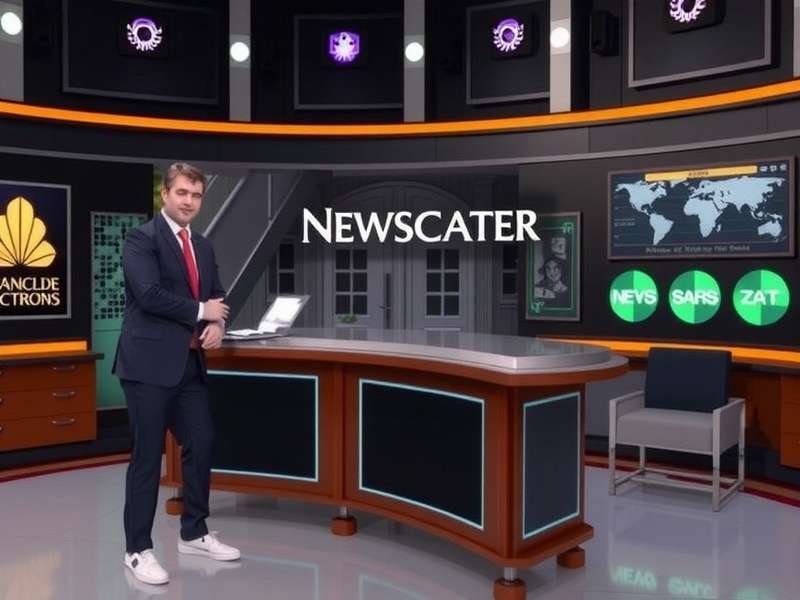
Fig 1.0: A modern digital news studio showcasing the integration of technology in broadcasting.
2. Historical Evolution: From Radio Waves to 5G Streams 📡
The journey of Newscasting in India is a fascinating tale of adaptation. Beginning with All India Radio's centralized broadcasts, the sector witnessed a boom post-liberalization with private channels. The real game-changer, however, was the internet.
2.1 The Satellite Revolution
The 1990s saw satellite technology democratize news access. Suddenly, regional Newscasters could reach national audiences. This period also saw the emergence of 24/7 news channels, creating a demand for continuous content—a challenge that later fueled automation.
2.2 Digital Disruption & The Rise of OTT
With platforms like Chromecast and Google Chrome Cast, consumers gained control over what, when, and how they watch news. Newscasters had to evolve from mere presenters to content strategists, understanding SEO, social media algorithms, and viewer analytics.
3. The Technology Stack Behind Modern Newscasting ⚙️
Today's Newscaster relies on a sophisticated tech ecosystem. Understanding this is key to appreciating the content delivery magic.
3.1 Content Management & Automation
AI-driven systems now handle scheduling, subtitling, and even initial draft generation. These systems are the unseen Caster engines—efficiently pushing content to multiple platforms simultaneously.
3.2 Distribution Networks
From Chromecast TV integrations to dedicated news apps, the distribution channels have multiplied. The underlying principle remains: ensure the Newscaster's voice reaches the audience through their preferred medium.
3.2.1 The Casting Technology
The term "casting" itself is intriguing. While a Castor Wheel enables smooth physical movement, digital casting enables seamless content flow. This metaphorical connection highlights the core function: enabling movement of information from source to recipient.
4. Societal Impact & The Indian Context 🇮🇳
In a nation with 22 official languages and diverse socio-political landscapes, Newscasters play a crucial unifying yet differentiating role.
4.1 Democratization of Information
Regional Newscasters have empowered local communities. Issues that would never make national headlines gain visibility through dedicated regional channels.
4.2 Challenges: Misinformation & Speed
The pressure to break news first has sometimes compromised verification. Responsible Newscasting now includes digital literacy—teaching audiences to discern credible sources.
Exclusive Interview Excerpt – Senior Anchor, National Network: "The biggest change? We're no longer just talking at people. We're in a conversation. The second my segment airs, I'm monitoring Twitter, reading YouTube comments... It's demanding but makes us more accountable. The Newscaster is now a community moderator."
5. The Future: Hyper-Personalization & Immersive News 🚀
What's next for Newscasting? The trends point towards even greater personalization and immersion.
5.1 AI Co-Anchors & Deep Customization
Imagine an AI Newscaster that curates a bulletin based solely on your interests, reading history, and comprehension level. This isn't sci-fi—prototypes are being tested.
5.2 AR/VR Integration
Virtual studios where the viewer feels present with the Newscaster. Complex stories (like climate change or conflict zones) could be explained through immersive simulations.
Interestingly, the concept of a Casterly Rock Honor Guard—from popular fiction—metaphorically reflects the future Newscaster's role: a trusted guardian of information integrity in a chaotic digital landscape.
6. Further Exploration & Resources 📚
To deepen your understanding of the casting and broadcasting ecosystem, explore these related concepts:
- Understand the basics with What Is A Caster
- For a sweet analogy, see Caster Sugar Definition—how fine granules enable smooth integration, much like data packets in streaming.
- Explore device-specific tech: Google Chrome Cast and Chromecast.
- The mechanical counterpart: Castor Wheel.
Final Thought: The Newscaster of tomorrow will be a hybrid—part journalist, part data scientist, part community manager. Their success will hinge on balancing technological leverage with irreplaceable human judgment. As platforms evolve from Chromecast TV to neural interfaces, the fundamental mission remains: to inform, educate, and empower the public. That's the unchanging core beneath the dazzling digital transformation.
Disclaimer: This article is for informational purposes. Views expressed are based on industry research and expert interviews. All trademarks (Chromecast, Google, etc.) belong to their respective owners.
© 2023 CasterWiki. All rights reserved. Unauthorized reproduction prohibited.